


Since the start of this year, the Collegiate Propulsive Lander Challenge team has made significant progress across all parts of the competition, especially in vehicle controls and architecture. These efforts have brought the team closer to their goal of testing the subscale lander before the end of the academic year.
The architecture of the subscale vehicle has undergone major changes over the past couple of months to prepare for the testing. “I redesigned it to be a lot lighter. Specifically, it's 40% lighter than the previous design,” says Noah Hacker, “We had a design made out last year, but it was a little heavy for the motor we were going to use.”
Another major change comes from the materials used to manufacture the subscale lander's frame. The frame will be 3D printed primarily from PETG-CF, a PETG plastic reinforced with carbon fiber flakes, making it very durable and lightweight. These changes to the vehicle architecture are very important, as the lander will operate on a gimbal system that heavily depends on weight.
“It's a two-axis gimbal using two servo motors; it kind of gimbles to say level in flight,” says Hacker. “It's like balancing a broom on your hand. You have to continuously move your hand to balance the broom. It's kind of doing the same thing. Any wind, any interruption, any variables introduced to the system can cause movement we don’t want”.
That is where the vehicle control subteam comes in. Their main focus over the past couple of months has been designing the printed circuit boards needed for the subscale lander. These boards will read data throughout the subscale flight, including position, navigation, and battery life, helping the subscale operate the gimbal system effectively.
“We're going to be able to take all the information pulled by our sensors, such as our gyroscope, and be able to measure what angle the rocket's sitting at,” says Spencer Johnson, the Vehicle Control Team Lead. “Then we're able to take that, do some math, and figure out what angle the rocket's engine needs to be at.”
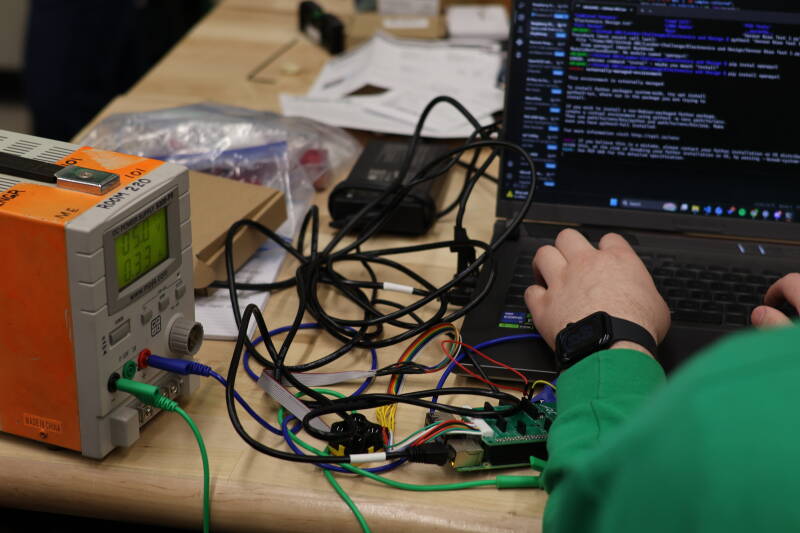
The next step is ordering the circuit boards and adding them to the subscale for testing, which comes with its own challenges. “We don't have a lot of experience in a club with circuit boards; it’s a lot of firsts for us. It's learning a new software, learning new design constraints, learning new information about what might work and what might not work,” said Johnson. “There are some differences and challenges that we can't predict online, so we just have to actually build and start testing for those in person.”
Even with the challenges, the vehicle controls subteam is still learning a lot about what they can apply to the future full-scale lander. Being able to work with high currents and design components capable of handling large amounts of energy is new to the team and will be very important at full scale.
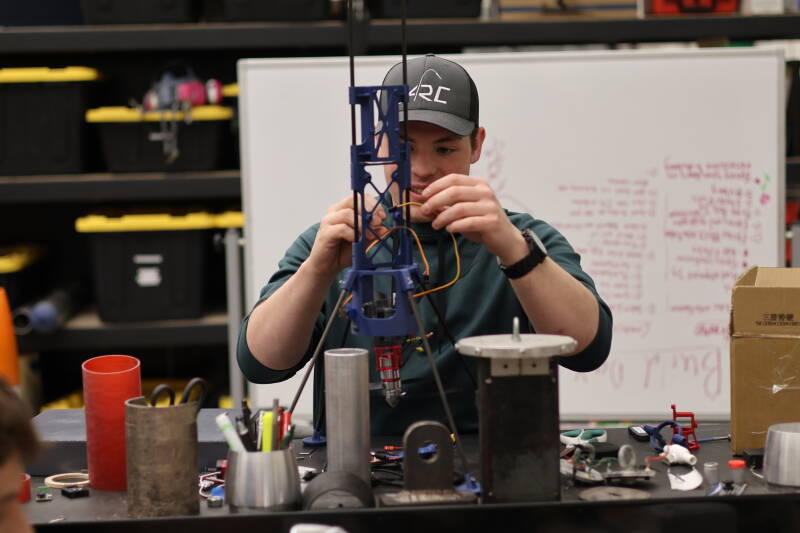
As the end of the year approaches, the vehicle architecture and controls teams are working hard to get the subscale ready for testing. This includes the actual manufacturing of the lander and the assembly and attachment of the hardware to the frame. After that, some stress testing will be conducted to ensure the frame will withstand the impact forces it might experience. At the same time, the controls team will focus on programming to ensure the gimbal system can sense any movement of the subscale and adjust accordingly.
The teams will continue working hard on the subscale lander and are hopeful that testing will start within the month.
Author: Anna Stambaugh
Add comment
Comments